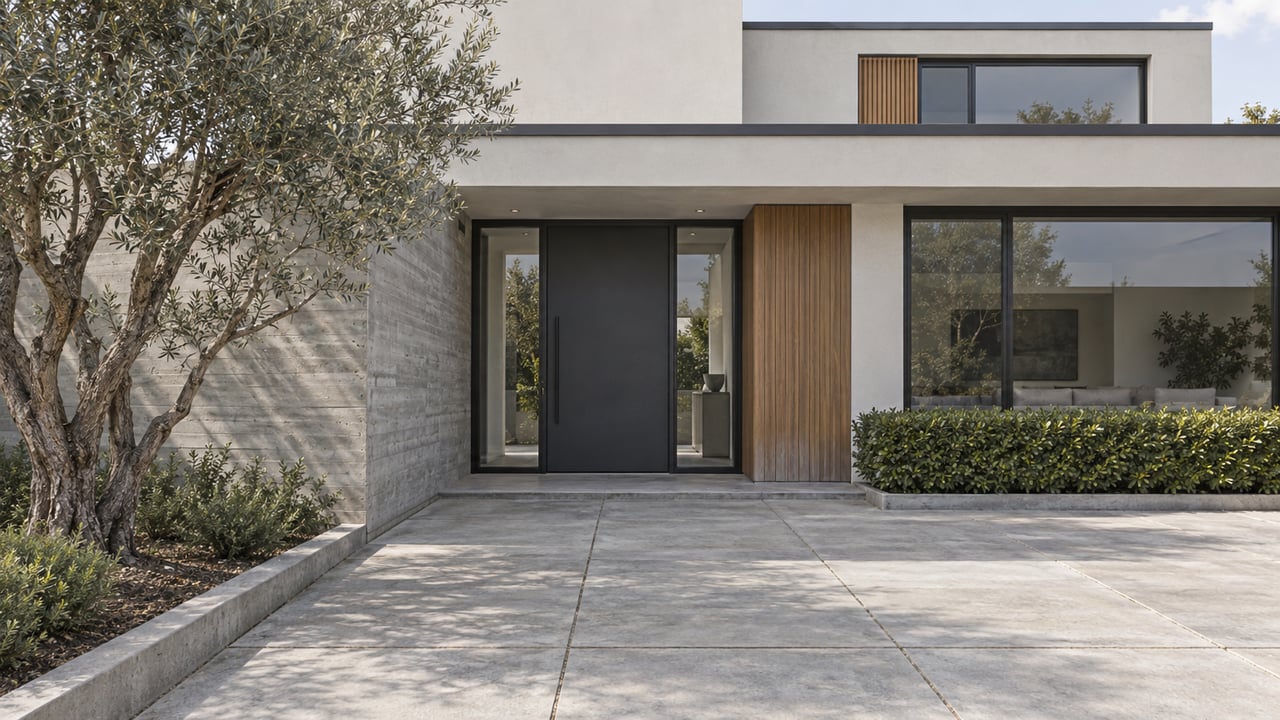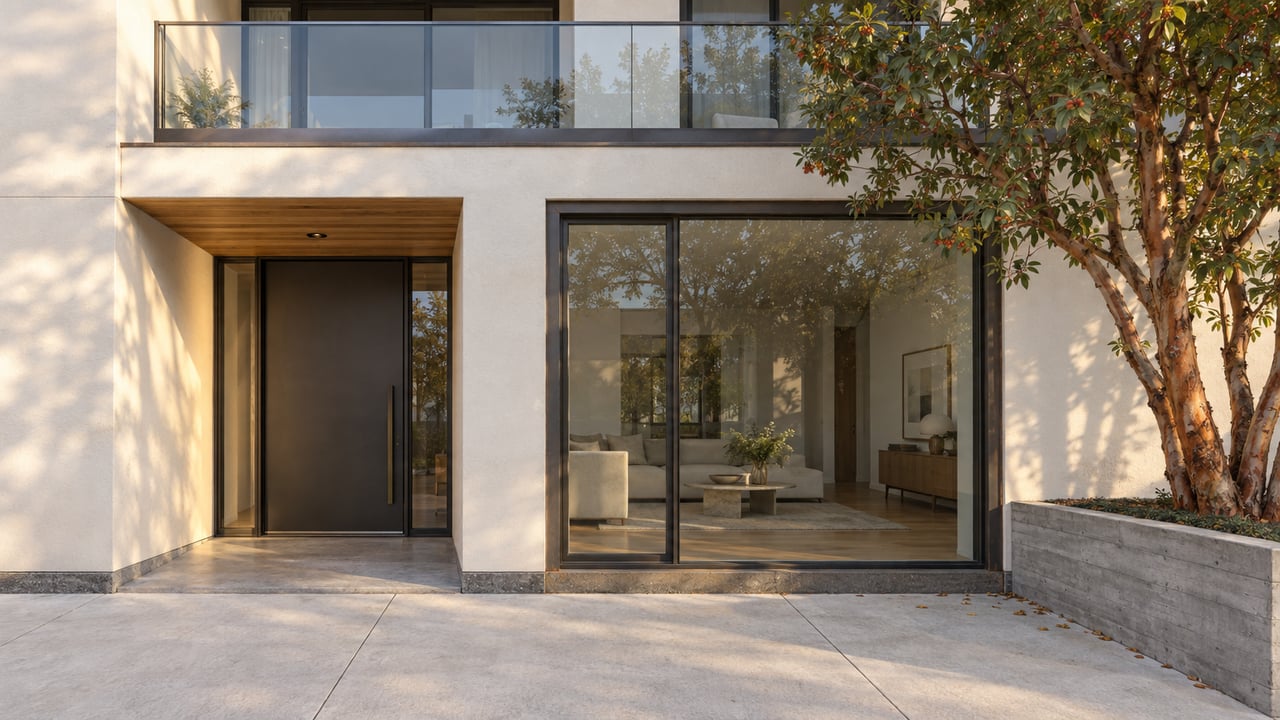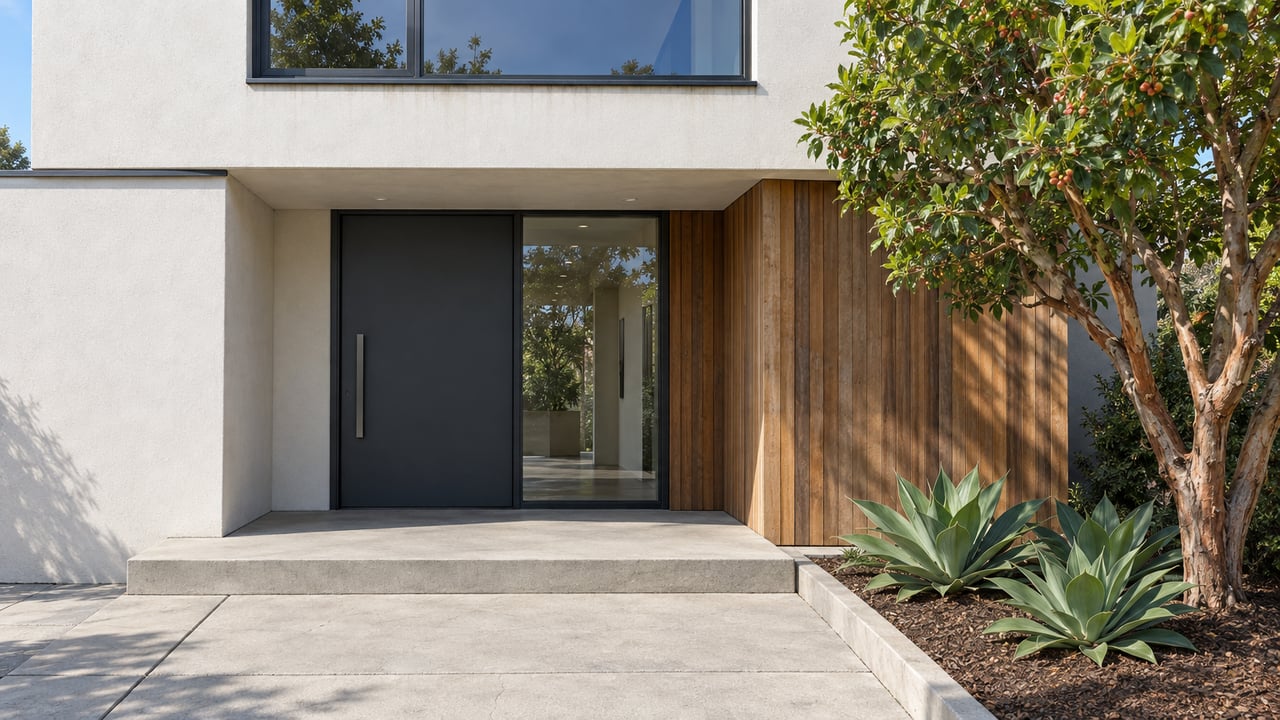
The corner lot at 2904 Delaware Avenue sits just north of the 10 Freeway, a short walk east of the Bergamot Station complex and the E Line. It holds a single-family house. City records show the owner, Eric Silverberg, has filed through Ficus Forest, LLC to replace it with five three-story townhomes, each with three bedrooms and its own on-grade parking space. The design is by Open Office, in stucco, metal and wood.
The city's tracker lists the preliminary application as filed on July 30, 2026, and the formal application as filed on August 28. Those dates matter. Between them, on August 27, Santa Monica closed six of its seven transit zones to the state law that made the project possible. Anyone buying near a Santa Monica rail stop this fall should think about the house next door in those terms: filing dates first, zoning maps second.
A window that stayed open for eight weeks
Senate Bill 79 guarantees height, density and floor-area standards for qualifying housing projects within a half mile of a transit stop. The Southern California Association of Governments identified seven such zones in Santa Monica: the Downtown Santa Monica, 17th Street/SMC and 26th Street/Bergamot E Line stations, the Expo/Bundy station, and three Downtown bus stops. Expo/Bundy is in Los Angeles, but its half-mile zone reaches into Santa Monica parcels.
The city moved quickly. In order:
- July 1, 2026. SB 79 takes effect, and eligible projects can use it.
- July 14, 2026. The City Council adopts an exclusion ordinance for qualifying sites, effective August 27. Ordinance 2861, approved July 28, sets the exclusion to run until one year after the city adopts its 2029–2037 Housing Element.
- August 27, 2026. The city's SB 79 presentation says six of the seven transit zones are excluded. Expo/Bundy does not yet qualify.
- September 22, 2026. The council adopts an upzoning of 89 single-family lots near Expo/Bundy so that zone can be excluded as well.
- October 23, 2026. The Expo/Bundy exclusion is scheduled to begin.
As of today, October 5, Expo/Bundy is the only Santa Monica transit zone where SB 79 still applies, and that lasts for about 18 more days.
The three addresses that got in
The city's tracker of ministerial housing applications, last updated October 1, lists three SB 79 filings. All three were filed during the window.
| Address | Preliminary filing | What it replaces | What's proposed |
|---|---|---|---|
| 1753 16th St. | July 15, 2026 | A duplex | A five-story, 55-foot, eight-unit building with two affordable units |
| 2904 Delaware Ave. | July 30, 2026 | A single-family house | Five three-story townhomes |
| 1517 15th St. | August 18, 2026, per the city tracker | A single-family house | A 12-story, 138-foot mass-timber building with 32 apartments |
The 1517 15th Street project, from developer Bruce Adler, sits a few blocks north of the 17th Street/SMC stop. It would rise as 11 floors of mass timber over a one-story concrete base. The application says six units would be set aside for very-low-, low- and moderate-income households, which makes the project eligible for waivers and incentives from local zoning rules. Plans call for four to eight parking spaces. The application's cover letter is dated August 14, four days before the date in the city's tracker. Either way, it came in before August 27.
The 2904 Delaware application lists 26th Street/Bergamot as its transit stop, 0.39 miles away. At 1753 16th Street, the applicant is GatherADU and Argishti Avetisyan. The application notes that the land-use consultant was in escrow to buy the property.
So the same law produced three very different projects: eight units replacing a duplex, five townhomes on a corner, and a 138-foot tower a few blocks from a light-rail stop.
Why the filing date outweighs the exclusion
The exclusion did not stop these projects. The city's August 25 community presentation said the preliminary applications filed by then "are allowed to proceed." A September 8 city presentation described three SB 79 projects as vested.
The mechanism is the SB 330 preliminary application. The 1517 15th Street applicant's cover letter says the preliminary filing freezes the local ordinances and standards in effect on the date it was filed. That is the applicant's position, not a city legal opinion. Still, 2904 Delaware shows how it plays out: preliminary filing on July 30, formal filing on August 28, and the project is still listed among the city's SB 79 applications.
For a buyer, this means a block can sit inside an excluded zone and still have a vested SB 79 project down the street. The exclusion controls what can be filed from here on. The tracker shows what was already filed.
Expo/Bundy, the zone that stayed open
The city council packet says a transit zone had to pass two tests to be excluded. At least 33% of its parcels had to allow density and residential floor area of at least half of SB 79's standards. And the zone's total permitted density had to reach at least 75% of what SB 79 specifies. Expo/Bundy easily passed the second test, with existing zoning at about 123%. It failed the first: only 74 of its 381 parcels, or 19.4%, met the threshold, and 126 were needed. State housing officials also told city staff that Los Angeles parcels could not count toward Santa Monica's total.
To close the gap, the council voted 4–2 to raise development limits on 89 R1 lots in the Pico neighborhood, in the area bounded by Interstate 10, Dorchester Avenue, Exposition Boulevard and Centinela Avenue. Mayor Caroline Torosis and Councilmembers Ellis Raskin, Dan Hall and Barry Snell voted yes. Councilmembers Lana Negrete and Natalya Zernitskaya voted no.
Raskin pointed out that SB 79 currently permits 55- to 60-foot buildings in the zone, while the city ordinance caps height at 28 feet:
"So this is essentially a downzoning."
The ordinance still faces a 90-day review by the state Department of Housing and Community Development, which can be extended by 30 days. The council also asked staff to study upzoning fewer parcels. The Neighborhood Taskforce, a nonprofit, says that a Santa Monica-only calculation needs just 52, according to the Santa Monica Daily Press. Hall cautioned against expecting changes: "I don't want people who are against what is happening tonight to, I guess, get their hopes up that something might change in the future."
What one of those Pico lots can hold now
On the 89 lots, the city's example is a typical 6,500-square-foot lot. It can now hold six units at a 1.25 floor-area ratio, with the R1 height limit of 28 feet unchanged. The adopted standard sets a minimum density of one unit per 1,080 square feet, and the higher floor-area ratio applies only to multi-unit projects that meet it.
Owners are not required to build anything. The six-unit figure is the lot's capacity and the bar a project must clear to get the extra floor area. For a buyer looking at a house in that rectangle, the realistic future next door is a two-story-scale building of about six homes, rather than the 55-to-60-foot buildings SB 79 would have allowed. Raskin also noted that existing state laws already allow up to five units on a 6,500-square-foot single-family lot.
City staff reported that five of the 89 parcels have rent-controlled units. In July, Negrete warned that upzoning R1 lots could invite speculative investor buying. We found no local reporting that confirms acquisitions, listings marketed as development sites, or price changes on these lots. Any pricing effect is speculation for now.
The 2030 date belongs in the purchase math
The exclusions are temporary. Community Development Director Jing Yeo estimated they will end around October 2030, one year after the next Housing Element is adopted. The city's own presentation says that after 2030, "all parcels in TOD zone will inevitably be affected by SB 79 to some capacity." Yeo said Santa Monica must eventually allow at least half of SB 79's standards across its transit zones if state law stays the same.
For reference, these are the SB 79 minimums the city has presented:
- Within 200 feet of a stop: 85 feet, 140 units per acre, floor-area ratio of 4.0
- Within a quarter mile: 65 feet, 100 units per acre, floor-area ratio of 3.0
- Within a half mile: 55 feet, 80 units per acre, floor-area ratio of 2.5
SCAG measures these distances from pedestrian access points, not from the center of the station, and says its map will be updated further. A house that looks just outside a half-mile ring on a casual map may sit inside it once the measurement starts at a station entrance.
If you plan to own for ten years, the next five are covered by the exclusion and the five after that are not. The terms after 2030 will come out of the city's comprehensive planning and the 7th Cycle Housing Element.
Due diligence for a house within a half mile of the tracks
- Check the city's ministerial housing applications tracker for vested SB 79 or SB 330 filings near the property, not just on the block itself.
- Confirm which transit zone covers the parcel using SCAG's SB 79 map, measured from station access points.
- If the house is in the Pico rectangle around Expo/Bundy, find out whether any preliminary application is filed before October 23, and follow the state's review of the 89-lot ordinance.
- Assume a hold that runs past 2030 will be subject to whatever standards Santa Monica adopts with its next Housing Element.
For a house on a Santa Monica block within walking distance of the E Line, these questions belong in the offer timeline, before contingencies come off. Sam & Rudi can pull the filings near a specific address, check where a parcel falls on the transit-zone map, and explain how the 2030 date affects your price and your plans. Schedule a private consultation before you write an offer.
This article is general information, not legal, tax or financial advice. Consult a qualified professional about your situation.