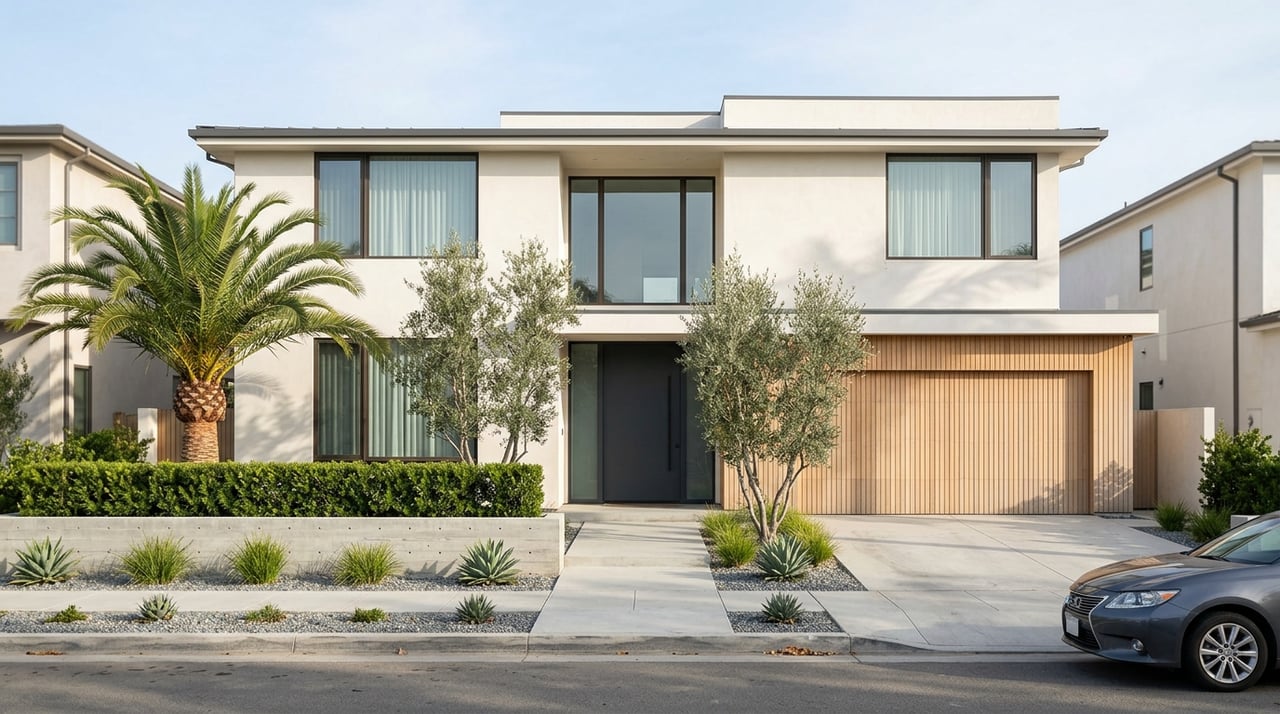
If you love West Hollywood’s restaurants, nightlife, and walkability, you may also wonder where you can find a street that feels a little more relaxed at the end of the day. That is a common goal here, especially in a city where the mood can shift quickly from one block to the next. The good news is that there are several quieter-feeling pockets that still keep you close to the energy that makes WeHo so appealing. Let’s dive in.
What “quiet” means in West Hollywood
In West Hollywood, “quiet” is usually not a neighborhood-wide label. It is more often a block-by-block experience shaped by traffic, nearby nightlife, and how close you are to major corridors like Sunset Boulevard and Santa Monica Boulevard.
City planning materials help explain why. West Hollywood is compact and active, while city policies also focus on quality of life, reducing land-use conflicts, and making residential streets safer and more comfortable. That means the calmest-feeling streets are often one or two blocks off the busiest corridors or inside residential overlay areas.
The city’s Neighborhood Traffic Management Program is another big factor. It is designed to reduce through-traffic, slow traffic on residential streets, and improve day-to-day comfort on neighborhood blocks. West Hollywood also restricts commercial noise that is plainly audible from residential property between 10:00 PM and 8:00 AM.
Norma Triangle stands out
If you are searching for one of the clearest examples of a quieter-feeling pocket in West Hollywood, Norma Triangle belongs near the top of the list. The city describes it as a small neighborhood of 173 parcels in the northwest triangle of West Hollywood, with single-family homes surrounded by commercial and multifamily buildings.
What makes Norma Triangle so appealing is the contrast. You can be close to shops, bars, and restaurants, yet still find narrow, tree-lined streets with one- and two-story buildings on small lots. That mix often creates a more tucked-away feel without giving up the convenience of being in central WeHo.
The area also reflects a wide range of architectural eras, which gives it a layered, established look. If you want a more residential setting while staying near the city’s social core, this is one of the strongest places to explore.
West Hollywood West offers residential character
Another strong option is West Hollywood West. The city adopted overlay guidelines here after local concerns about replacement homes that did not fit the neighborhood character, which tells you something important about how closely this area’s residential feel has been protected.
This overlay area is generally bounded by Doheny, Melrose, La Cienega, and Beverly. Within that zone, blocks such as Almont, Huntley, Norwich, Robertson, San Vicente, Sherbourne, Westbourne, West Knoll, and Westmount are often associated with a more residential street pattern.
A public hearing notice described the area as low-density single-family or two-unit residential. For buyers and renters who want streets that feel more buffered from the busiest commercial frontage, West Hollywood West is one of the most practical places to focus your search.
Central blocks near Kings and Willoughby
If you want to stay very central, look closely at the residential grid around Kings Road, Willoughby, and Vista/Gardner. These streets give you a useful middle ground between convenience and a calmer day-to-day feel.
The city identifies Willoughby as a residential street parallel to Santa Monica Boulevard. Its street design work for Willoughby, Vista/Gardner, and Kings is aimed at safer walking and biking while also reducing through-traffic. The city also notes that Vista/Gardner has lower vehicle volumes and slower speeds than nearby major cross streets.
That matters if you want to live close to West Hollywood’s amenities without feeling like you are right on top of the busiest activity. In practical terms, these blocks can offer quicker access to parks, dining, and daily errands while still feeling more residential than the main commercial corridors.
Other residential pockets worth watching
Beyond the best-known examples, there are a few additional pockets that can be worth a closer look. City neighborhood-watch groupings point to areas such as Flores/Gelson Heights, Harper/Sweetzer, Ogden/Orange Grove/Genesee, and Plummer Park blocks.
These are not all identical, and not every block will feel equally calm. Still, they are useful examples of residential pockets that sit closer to local streets and park-adjacent areas rather than directly on the busiest commercial frontages.
This is where local knowledge really matters. A street that feels comfortable and tucked away at one end may change noticeably just a few blocks over.
Why some streets feel calmer
Several city-level factors help explain why one block may feel quieter than another. The first is distance from major corridors. Streets just off Sunset Boulevard or Santa Monica Boulevard can feel very different from the corridor itself, even when they are only a short walk away.
The second is traffic pattern design. West Hollywood’s traffic management efforts are specifically intended to slow cars and reduce cut-through traffic on residential streets, which can have a real impact on noise and comfort.
The third is land use. Nearby entertainment venues, commercial uses, and larger multifamily buildings can change how active a block feels throughout the day and night. In a compact city like West Hollywood, those transitions happen fast.
Housing options on quieter-feeling streets
A quieter-feeling street in West Hollywood does not point to just one type of home. The city says 64% of residents live in apartments, and four out of five housing units are in large multifamily buildings, so your options may include a condo, duplex, small apartment building, or single-family home depending on the block.
That is important if you are starting your search with a fixed picture in mind. In WeHo, you may find a calmer street atmosphere in a smaller condo building just as easily as in a low-density residential pocket with detached homes.
For renters, local regulations are also part of the picture. The city says the full Rent Stabilization Ordinance applies to multifamily residential rental units built before July 1, 1979, and also to some pre-1979 single-family home and condominium tenancies that began before January 1, 1996. The city also states that nearly all residential units are covered by the ordinance’s eviction section, which limits evictions to specific just-cause reasons.
How to evaluate a block before you move
If you are serious about finding a quieter-feeling street in West Hollywood, it helps to look beyond the neighborhood name. Exact block location matters more than branding alone.
Here are a few smart ways to narrow your search:
- Visit the street at different times of day
- Check how close the property is to Sunset Boulevard, Santa Monica Boulevard, or other busy corridors
- Look at whether the block feels primarily residential or mixed with active commercial uses
- Review the city’s Zoning Map and InfoMap to understand zoning, nearby permits, and open projects
- Pay attention to street width, traffic speed, and whether the block appears to attract through-traffic
The zoning and project review step is especially helpful in West Hollywood. The city’s mapping tools can show the uses and development standards tied to a parcel, along with open permits and nearby projects that may shape the block’s day-to-day feel.
Walkability still matters here
One reason these quieter-feeling pockets stand out is that they still offer strong access to what people love about West Hollywood. The city’s mobility planning emphasizes making streets safe, comfortable, and inviting for walking and bicycling, and the central station-area planning materials tie neighborhoods like WeHo Heights, West Hollywood North, Norma Triangle, Tri-West, and parts of West Hollywood West to major local destinations.
That means you often do not have to choose between convenience and comfort. Some of the best streets for this search are the ones that let you enjoy parks, dining, local services, and entertainment nearby while keeping your home base a bit more buffered.
The simplest takeaway
If you want the shortest shortlist, start with Norma Triangle, West Hollywood West, and the residential grids around Kings, Willoughby, and Vista/Gardner. Then consider park-adjacent or local-street pockets like the Plummer Park area and other central residential groupings as secondary options.
The key is to think in terms of quieter-feeling streets, not perfectly quiet neighborhoods. In West Hollywood, that is the most accurate and most useful way to search.
If you want help narrowing the right block, building type, and lifestyle fit in West Hollywood, Sam Araghi can help you evaluate the details that matter most and guide you toward the best match for your goals.
FAQs
Where can you find quieter-feeling streets in West Hollywood?
- The strongest places to start are Norma Triangle, West Hollywood West, and the residential streets around Kings Road, Willoughby, and Vista/Gardner.
What makes a West Hollywood street feel quieter?
- In West Hollywood, a quieter-feeling street is usually one or two blocks off major corridors and shaped by lower through-traffic, more residential land use, and some separation from nightlife activity.
Are there walkable quiet areas in West Hollywood?
- Yes. Some of West Hollywood’s more residential pockets still offer good access to parks, dining, local services, and major city destinations.
Can renters find calmer blocks in West Hollywood?
- Yes. A quieter-feeling street can include apartments, condos, duplexes, and other multifamily housing types, depending on the exact block.
How should you check a West Hollywood block before renting or buying?
- Visit at different times, study how close it is to major corridors, and review the city’s Zoning Map and InfoMap for nearby zoning, permits, and active projects.