Every West Hollywood condo purchase agreement includes a paragraph telling the buyer that the city has adopted seismic retrofit requirements, and that if they want to know more, they should call the Building and Safety Department. That paragraph, drawn from West Hollywood Municipal Code Chapters 13.28, 13.36 and 13.40, is the entire disclosure. It does not say whether the specific building under contract has completed its retrofit, applied for one, or ignored the notice entirely. It exists to put buyers on notice that the ordinance is real, not to tell them what it costs.
Right now, that gap matters more than usual. A federal grant program that has quietly subsidized part of the retrofit process for West Hollywood's soft-story buildings is closing on a hard schedule this year, and the closing date is getting attention in trade press and engineering-firm marketing. But the deadline making headlines is not the number a buyer should actually be tracking. The grant was never large enough to move the real cost. The number that determines whether you inherit a five-figure assessment sits in a document most buyers never ask for until it's too late to matter: the HOA reserve study.
The paragraph in your contract, and what it leaves out
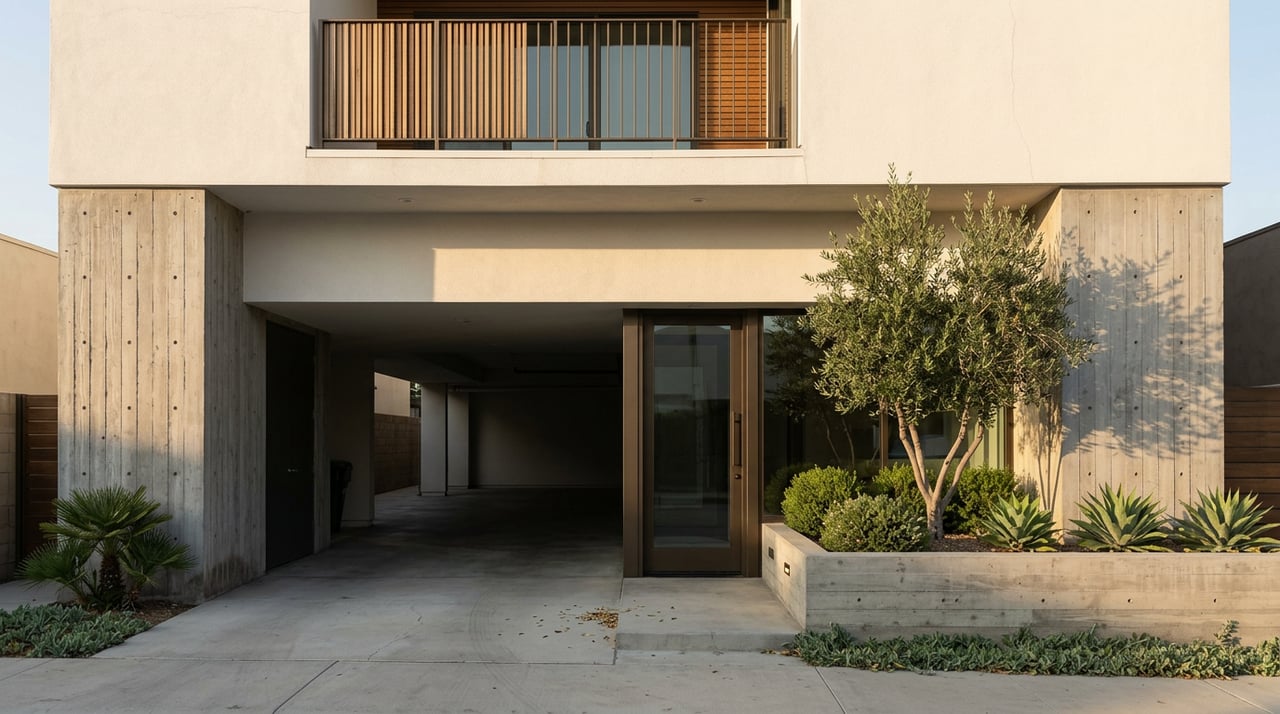
West Hollywood's Mandatory Seismic Retrofit Program dates to Ordinance 17-1004, adopted April 17, 2017 and effective the following year. It targets wood-frame buildings with soft, weak, or open-front ground floors, the tuck-under-parking style common across the city's mid-century stock, where a permit for construction was applied for before January 1, 1978. A citywide survey by Degenkolb Engineers identified roughly 780 buildings that fall within scope, and the city's own retrofit FAQ confirms that soft-story condominiums are included in the program, not just rental apartment buildings.
The purchase-contract disclosure tells you this framework exists. It does not tell you where your building falls within it. That's a meaningful omission nine years after the city adopted the ordinance: according to reporting from WEHOonline, about 83 percent of soft-story wood-frame buildings citywide have taken steps toward compliance as of mid-2026. Read the other direction, that leaves somewhere around 130 buildings that have not yet documented any action, nine years after the city council first passed the requirement. A buyer relying on the standard disclosure paragraph has no way to know which category their building falls into without asking directly.
The deadline everyone's talking about
The federal piece of this story is real, and it is closing fast. West Hollywood's Seismic Retrofit Grant Program, funded through FEMA and administered with the California Governor's Office of Emergency Services, has two phases:
- Phase 2 Construction Grants stopped accepting new applications on February 3, 2026. If a building's HOA hasn't already applied, that funding path is closed.
- Phase 1 Design Grants remain open only to complete applications submitted by September 1, 2026, roughly three weeks from today.
- CalOES has told the city the entire program must wind down by January 3, 2027, with all grant-funded work finished and documented by October 9, 2026, and FEMA has confirmed there will be no further extensions.
That's a genuinely tight window, and it explains why structural engineering firms are marketing hard around it right now. But look at what the grant actually pays for before treating the deadline as the headline of your due diligence.
Why the deadline matters less than the reserve study
Design grants cover up to 75 percent of eligible engineering costs, but they're capped at $2,000 for most soft-story projects and up to $5,000 for the smaller number of non-ductile concrete or pre-Northridge steel moment frame buildings. Engineering and permitting for a typical SWOF retrofit runs $15,000 to $40,000 on its own, before construction begins. Construction costs, per the city's own rough-order-of-magnitude study, range from about $40,000 to $160,000 per building. A separate estimate from a structural engineering firm active in West Hollywood puts total project costs at $50,000 to $200,000, with per-unit costs averaging $15,000 to $25,000 depending on building configuration.
Run the math on the best case: a $2,000 design grant against a $100,000 total project is a two percent offset. Against the $200,000 end of the range, it's one percent. The federal deadline closing this fall doesn't change whether your building's HOA can afford its retrofit. It changes whether that HOA can shave a few thousand dollars off the design phase of a bill that was always going to land on owners either way, through reserves that were funded years ago or through a special assessment that shows up after you've already closed.
That's the reframe worth sitting with. The grant deadline is a real, dated, verifiable fact. It's also close to irrelevant to your actual exposure as a buyer. The document that tells you whether you're walking into a funded retrofit or an unfunded one is the reserve study, and California law requires HOAs meeting the statutory threshold to update that study with a visual inspection at least every three years.
The seismic deadline is a headline. The reserve study is the balance sheet. Buyers who read only the first one are reading the wrong document.
Two zip codes, two different exposure profiles
West Hollywood's condo stock splits along its two zip codes in ways that matter for retrofit risk specifically, not just style or price per square foot.
| Zip Code | Typical Condo Stock | Where Retrofit Exposure Concentrates |
|---|---|---|
| 90069 (Sunset Strip and western WeHo) | Full-service towers like Westview Towers and newer amenity buildings such as Habitat825, alongside 1960s and 1970s low-rises | Pre-1978 low-rises with ground-floor tuck-under parking, often mixed in among newer construction |
| 90046 (east of La Cienega toward Fairfax and Melrose) | Spanish Revival and Art Deco-era walk-ups, smaller HOAs | Similar pre-1978 wood-frame stock, frequently with smaller reserve pools spread across fewer units |
A smaller HOA with fewer units splitting a $100,000 retrofit bill faces a materially larger per-owner assessment than a larger building spreading the same cost across more doors. That's a detail no zip-code median price captures, and it's exactly the kind of building-specific math a buyer needs before removing contingencies, regardless of which side of La Cienega they're shopping.
Before you remove contingencies, get these in writing
- The most recent reserve study, including whether seismic retrofit costs are itemized as a funded line item or listed as a future, unfunded expense.
- The building's SWOF compliance status, including whether a screening report has been filed and where the building sits in the city's five-year compliance timeline from its notification date.
- Grant application history, if any. A building that already applied for Phase 2 construction funding before the February 2026 cutoff has a different cost outlook than one that missed it.
- Board meeting minutes referencing retrofit costs or special assessment discussion, which often surface funding gaps months before they become owner-facing.
- The HOA's most recent exterior elevated element inspection, required under state law (Civil Code Section 5551) for balconies, decks, and walkways, with the first inspection deadline having passed January 1, 2025. As of January 1, 2026, that report must be included in the standard disclosure packet under a newly enacted amendment, so it should already be part of what your escrow officer requests.
None of this requires a structural engineering degree to interpret. It requires asking for five documents before the contingency period ends, not after.
What this means for your offer
The market gives buyers real room to ask for these documents and act on what they show. Over the three months ending in May 2026, the median West Hollywood sale price sat just above $1 million, down roughly 5.6 percent year over year, with homes taking about 86 days to sell. By June 2026, one aggregator described the city as a buyer's market outright, with homes selling around 3.15 percent below asking and roughly 70 percent of April 2026 sales closing below list price. A broader August 2026 aggregate that includes single-family homes puts the citywide median closer to $1.3 million, a gap that reflects how differently condos and houses are trading right now, not a sudden reversal in the condo segment itself.
In a market moving on an 80-to-90-day timeline instead of a bidding-war timeline, a buyer who finds an unfunded retrofit in the reserve study has standing to ask for a price adjustment or a credit, not just walk away. Sellers in older buildings with thin reserves are already competing against better-documented, better-funded buildings for the same shrinking pool of buyers. That leverage is worth more than watching a federal calendar.
FAQ
Does West Hollywood's disclosure tell me if my specific condo building has completed its retrofit? No. The standard purchase-contract disclosure confirms that the city's seismic retrofit ordinance exists and directs buyers to the Building and Safety Department at (323) 848-6320. It does not report building-specific compliance status. You have to request that separately from the HOA or the city's seismic program at [email protected].
If the federal grant window closes, does that mean my HOA can't fund the retrofit at all? No. It means the HOA loses access to a modest design-cost subsidy capped at $2,000 to $5,000. The construction cost, which represents the overwhelming majority of the total bill, was never covered by the grant program and still comes from reserves, a bank loan, or a special assessment regardless of the federal timeline.
What if my building isn't a soft-story wood-frame type? The city's broader seismic survey also flagged 55 non-ductile concrete buildings and 31 steel moment-frame buildings built before the 1994 Northridge earthquake, each with its own compliance roadmap on the city's seismic retrofit webpage. The reserve-study request applies just as much to those buildings as it does to SWOF structures.
Is a thin reserve study a dealbreaker? Not automatically. It's information. A building with an honest, funded plan for a known cost is a different risk than a building with the same cost hidden in board minutes and no funding plan at all. The document tells you which one you're looking at before you're financially committed.
If you're evaluating a West Hollywood condo and want a second set of eyes on the HOA package before your contingency period runs out, Sam & Rudi can help you read the reserve study against the building's actual retrofit exposure and negotiate from there. Schedule a Private Consultation before you remove contingencies, not after.